

With the BEX 2026 Mid-Year Update event coming up in a couple of weeks, everyone at the company is down the data-crunching rabbit hole, focused on prepping and polishing our market and sector information for presentation.
Given the general vibe around the office, and the general slowdown in board/commission/council activities and new project submissions this time of year, I decided to take a look at the Industrial sector and see if anything in particular grabbed my attention for this issue’s front page.
It did.
The DATABEX project database launched slightly more than 10 years ago, and it has evolved and matured to become the most expansive and frequently updated repository for project information in the state. Not only does it provide the most generally up-to-date information on specific projects, but it is also robust and flexible enough to allow both broad-based and narrowly focused examinations of nearly any component of the Arizona Architectural/Engineering/Construction industry.
Even though we report on hundreds of projects every year, in both new submissions and existing project updates, and even though Arizona has long been a leading market for Industrial development, the sheer volume of activity DATABEX has listed over the last decade was surprising.
Across Data Centers, Warehouse/Manufacturing, and Other Industrial, DATABEX has logged a total of almost 950 projects since it was launched in mid-2016. Not filtering the data in any way, and acknowledging complete data is not available for some projects, that totals out to more than 497MSF of proposed projects in 10 years, with a raw valuation estimate of nearly $245B.
Granted, those estimates include both master plans and their component projects, and square footage and construction cost estimates are not available for a noticeable share of the overall list, but even just taken as a face-value, back-of-the-envelope sketch, it is easy to see why Arizona has been a national leader for Industrial development.
Development Largely Missing in Outlying Areas
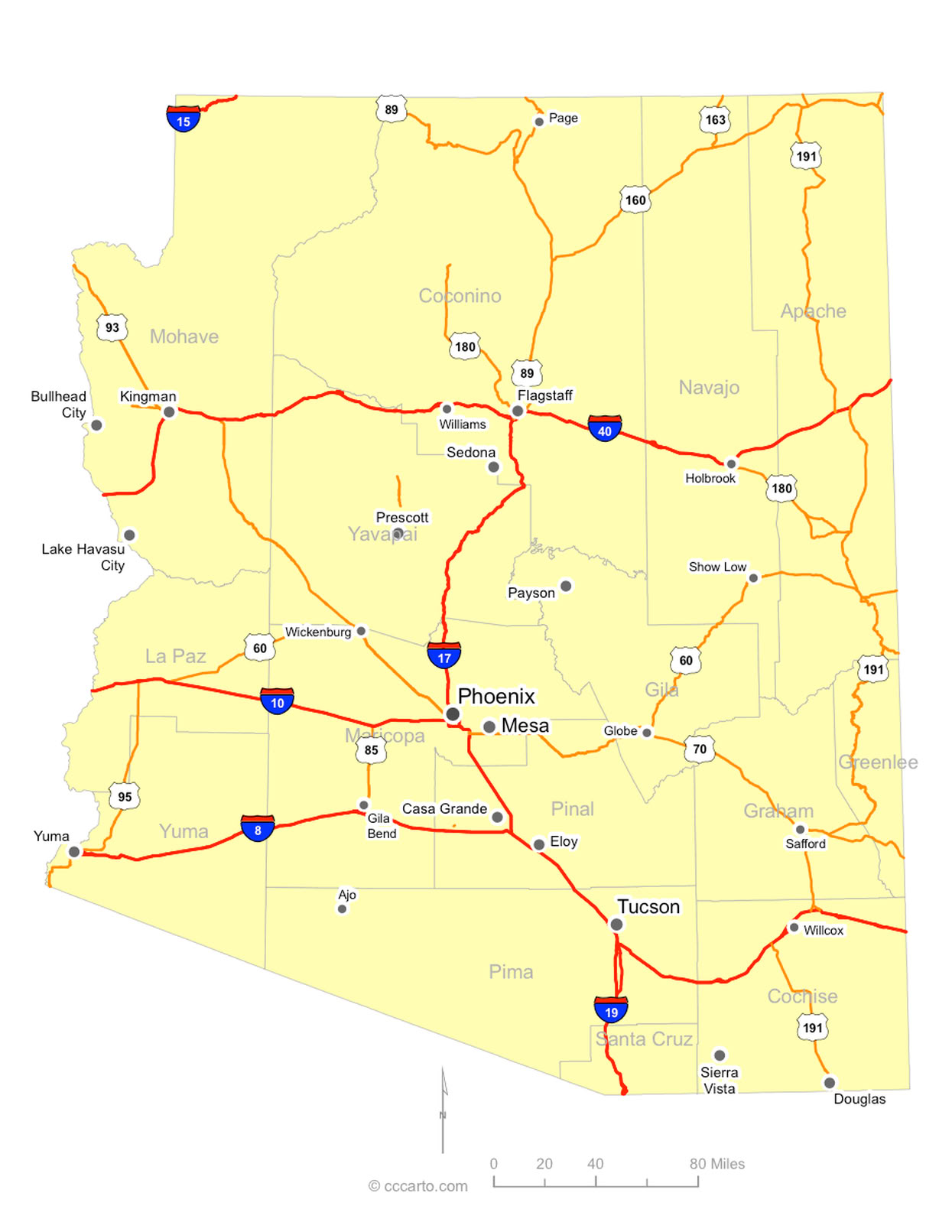
Once you start looking at the data, though, one item nearly leaps off the page: Almost all of Arizona’s Industrial development has taken place in Maricopa, Pinal and Pima counties.
While it would stand to reason the state’s two largest cities and the space between them would see the lion’s share of projects, the degree of the tilt was the surprising part.
Of a raw total count of 937 Industrial projects, only 47 are located outside the counties of Maricopa, Pinal or Pima.
The project total by county, including master planned projects that may have multiple projects under their umbrellas, breaks down as:
- Cochise: 3,
- Coconino: 5,
- Gila: 3,
- La Paz: 1,
- Mohave: 11,
- Navajo: 3,
- Santa Cruz: 3,
- Yavapai: 9 and
- Yuma: 9.
Even more interesting is the fact seven of these identified projects are master plans. If those are factored out, leaving only specific individual projects on the list, the count drops to 40.
One of DATABEX’s most useful features is the ability to see project statuses. Looking at rural Industrial projects across the state, however, leads to an even more jarring realization: Most of the projects proposed outside the three major counties in the last 10 years have either already been built or will never be built as originally planned.
Of those 40 proposed developments, 17 are shown as completed. Again, noting that full details are not available for all projects, of those that have details attached to them, the total completed development comes to more than 1.8MSF and $373M.
On the other end of the spectrum, however, 12 projects have been canceled. Most of these plans were scrapped before square footage was finalized in initial visions, but valuations were estimated for most of them. For the 10 projects that have data available, the estimated valuation is a shocking $8.825B. One of those projects, however, was a massive proposed data center development near Kingman that has since been dropped. Removing that project from the equation leaves a total of roughly $810.5M.
Speculation and Follow-Up
There are, obviously, extensive reasons for the dense concentration of Industrial development in the state’s three core markets. A short, off-the-cuff list would include:
- Proximity to transportation infrastructure,
- Availability of power and supporting resources and
- Access to labor.
There is also the universal market truth that momentum breeds momentum. If your competitors are basing their operations in the West Valley or south of Casa Grande, it makes sense for you to follow suit. Such decisions are both operationally functional and market fashionable.
The outer regions may well also have their industrial needs largely met already. Rail lines and the Interstate Highway System have been serving these areas for decades, and there may not have been any particular need to augment the existing offerings to accommodate the more recent booms.
As a rule, we are long past the need for interim facilities or waystations as items make their way from their place of origin to their destination.
There is also the fact that modern industrial developments, particularly in the Data Center space, may well require a prohibitive degree of infrastructure development to make operations feasible. While lower land prices and a scarcity of neighbors to take up torches and pitchforks in opposition to a new data center may offer a significant appeal to developers weary of fighting for every square foot of approval, issues like power generation, installation of transmission lines and proximity to water and workers could ensure even the most otherwise ideal piece of land will never pencil out.
Still, while neither positive nor negative, the sheer degree to which Arizona’s outlying areas have been passed over for new development may, just may, be a source of opportunity for an enterprising company or partnership with an appetite for risk and a degree of the “pioneer spirit” that brought the state into existence in the first place.