By Peter Madrid for Institute of Real Estate Management Greater Phoenix Chapter
The theme of the 13th Annual IREM-CCIM Economic Forecast was “The Real Scoop.” Judging by the comments of economists and industry panelists, the message that resonated was “Phoenix and Arizona are on fire.”
“Last year we talked about being late in the game and would there be extra innings,” said keynote speaker Elliott D. Pollack. “Where do we stand in the cycle now? Well, Phoenix is the most affordable major market in the Western U.S. We’re growing at three times that of other U.S. cities and still need to figure out how to deliver affordable housing. We’re likely to remain one of the top five metro areas in the country. Overall, I’d say the picture is positive.”
The Valley’s premier real estate outlook recently drew a crowd of more than 400. Besides Pollack, the Economic Forecast featured panelists who specialize in office, industrial, multifamily and retail properties.
The takeaways from each panel:
Office: The center of all activity continues to be Tempe, around Arizona State University and the Grand at Papago Park Center. Overall vacancy in that submarket is in the single digits. SkySong has added three more buildings, a hotel and an 800-unit multifamily project.
“Medical office presents opportunities for brokers and owners alike,” said Kate Morris with Transwestern.
Multifamily: While Arizona is enjoying a booming multifamily cycle, there are still issues on the horizon that could affect an industry that pumps $3.8B annually into the local economy.
“Last year is the first year we actually built enough units to meet the demand,” said John Carlson with Mark-Taylor. “The core of what creates demand is jobs. It’s all about jobs. But what keeps me up at night is rent control. It’s now an issue in 41 states.”
A lack of affordable housing is also a concern. More than 70 percent of all units built in the past few years have been specifically in Phoenix, Scottsdale and Tempe.
Retail: The new moniker for this property type, according to the panelists, is consumer real estate. A property type in which consumers want and expect an experience, whether it’s shopping or eating in a restaurant.
Trends? Josh Simon with SimonCRE said “a popular trend is the unanchored retail center. Retail is getting more localized.”
Industrial: As new transportation corridors open around the Valley – namely the loops 202 and 303 freeways – the industrial market has flourished, panelists agreed.
“The Southwest Valley is experiencing an increase of larger big box users because the land is cheaper out there,” said Jeff Foster with Prologis. “It’s e-commerce, food and beverage that is serving and fulfilling the population growth out there. The Loop 202 (South Mountain Freeway) is going to be a huge game changer.”
The East Valley is also in demand of product, from 10KSF-100KSF, according to Steve Larsen with JLL.
E-commerce, Megan Creecy-Herman said, is one of the darlings of the industrial sector. Data centers is the other.
The event was co-sponsored by the CCIM Central Arizona chapter and the Greater Phoenix Chapter of IREM.
NEWS TICKER
- [October 17, 2026] - Campaign Launched for Workforce Pell Grants in Ariz., Elsewhere
- [October 16, 2026] - Trammell Crow Taking Over Kierland Multifamily Project
- [October 16, 2026] - Arizona Construction Employment Fell by 1,900 in Sept.
- [October 16, 2026] - Arizona Projects 10-16-26
- [October 14, 2026] - 3 Major Hotel Projects Advancing in Phoenix
- [October 13, 2026] - Prescott Council to Vote on Fairgrounds Master Plan
- [October 13, 2026] - Regional Medical Center to Build New Hospital in Safford
- [October 13, 2026] - Industry Professionals 10-13-26
Experts Tout a Hot Arizona Market at Forecast Event
 By AZBEX Staff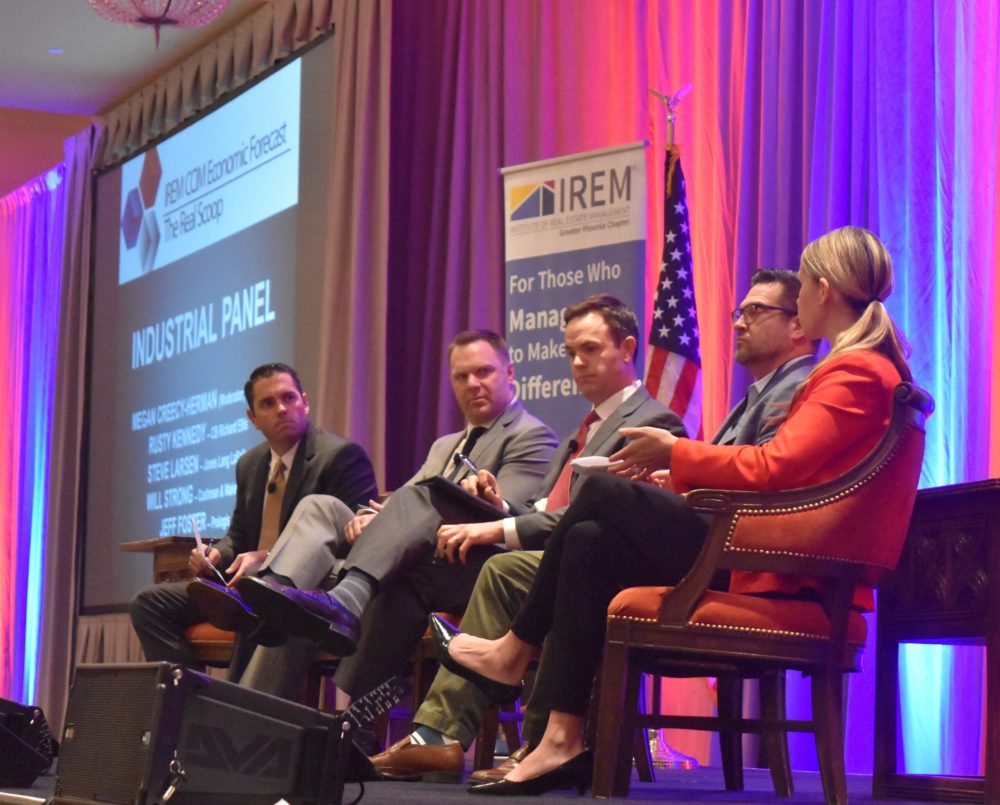
The Industrial panel weighs in on Phoenix area market trends at the 13th Annual IREM-CCIM Economic Forecast. Credit: Peter Madrid/Institute of Real Estate Management Greater Phoenix Chapter