

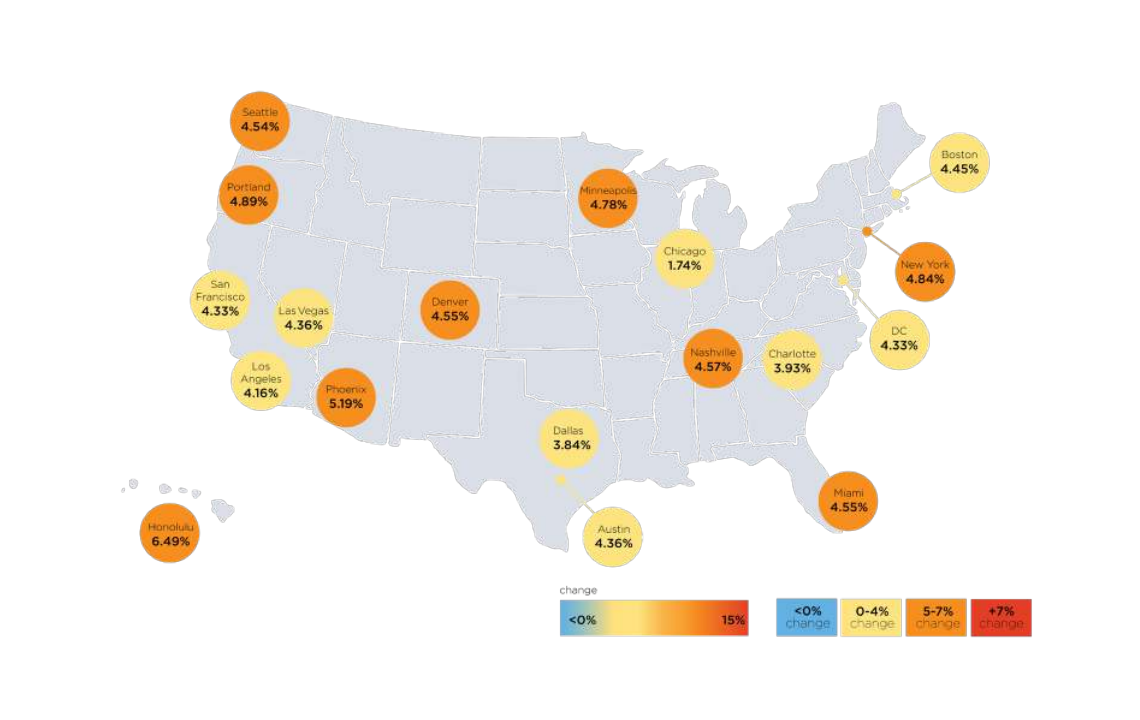
After several quarters of relative stability, construction costs are once again on the rise, fueled largely by an “exceptionally vigorous” pace of activity in non-residential megaprojects.
In its Quarterly Construction Cost Report for Q3 2026, Rider Levett Bucknall reported its National Construction Cost Index rose to 292.28 in July, up from 288.58 in April and 285.47 in January.
“Cost inflation rose by 1.28% over the quarter, reflecting an acceleration of 0.19% compared to the prior three months and setting the highest single-quarter increase seen in two years. Year-over-year, national cost escalation moved up to 4.45% from 4.37%, demonstrating persistent pricing pressure across the built environment,” according to the summary from Paul Brussow, president, North America.
Brussow went on to write, “Overall U.S. construction spending dropped 0.5% from June to July and contracted 3.8% year-over-year, yet investment varies dramatically across specific verticals. Private office construction values rose 21.3% annually solely because data center projects surged 57.2%, masking underlying weakness in traditional commercial spaces. In sharp contrast, single-family residential construction fell 6.5% year-over-year, while manufacturing construction declined 21.7%, dropping for a sixth consecutive month. Even with these declines, new construction starts jumped 25.6% in July.”
Cost data was awash in contracting indicators. The Architectural Billings Index continued its longest reported downturn, falling to 46.6 in July. Construction employment, meanwhile, added 120,000 jobs over the last year, hitting nearly 8.36 million jobs in August. Industry unemployment was reported at 3.1%.
With the latest numbers showing the lowest construction unemployment level in more than 25 years, competition for workers continues to be intense, fueling wage growth.
Overall construction costs were 8.9% higher year-over-year, with increases fueled in part by tariff-impacted materials like metals and petroleum products. Liquid asphalt was up 16.4%, while aluminum mill shapes rose 27.3%, and steel mill products were up 23.4%. Diesel’s dramatic increases were a major contributor, rising 77.8% YoY.
Construction put in place during July totaled nearly $2.16B, up 0.5% from June and 3.8% from July 2025.
Across the 18 cities reviewed for the Q3 report, construction cost increases averaged 1.28%. Chicago reported the lowest increases at 0.83%. Honolulu had the highest at 1.67%. Phoenix took the eighth lowest position with a reported increase of 1.28%.