

By CJ Jorgensen for AZBEX
Valley Partnership’s 2025 Water Summit Luncheon captured Arizona’s current hydrological landscape with the repeated motif, “We are running out of water. We have all the water we need.”
The Water Summit consisted of four different topics that included six speakers. The event began with Fennemore’s Director of Natural Resources, Rob Anderson.
Anderson, who coined the quote of the day, gave a broad overview of the history of water in Arizona and the future of water in the Grand Canyon state.
Water is sourced from four separate areas: the Colorado River, in-state rivers (such as the Salt River), reclaimed water and groundwater. Anderson noted that while statistics show reclaimed water is a small portion of overall water used in the state, it is becoming increasingly popular as time moves forward.
Two-thirds of statewide water use is for agricultural purposes. Furthermore, agricultural water use is declining over time as urbanization spreads and technological innovations increase efficiency.
Despite the massive population difference, more water was used in 1957 than today.
Arizona has a bifurcated system of water: groundwater and surface water are viewed differently. This is a trend throughout the three lower basin states.
The Colorado River is governed by seven different states: the Lower Basin states and Upper Basin states. Original Colorado River measurements were far more generous than the actual water flow due to a lack of technology and potential wet years.
In 2007, a contingency plan was created with Lake Powell and Lake Mead. Water shortages are measured by projections of water height in Lake Mead conducted at the end of the year. Projected shortages lead to water cuts.
In 2019, the Drought Contingency Plan was formed to implement further cuts in river allocations. This plan expires in 2026, and its replacement is due by the end of next year.
Groundwater has a different set of regulations and qualifications. The heaviest regulations are applicable in Active Management Areas, such as the Phoenix Metropolitan Area. Groundwater withdrawals are allowed from grandfathered rights, service area rights, withdrawal permits and exempt wells.
Assured Water Supply is a system that was created to ensure water users have sufficient supply to hydrate developments for the next 100 years. Certain cities have designated water supplies, making the process of obtaining AWS easier. Other cities, such as Buckeye and Queen Creek, require the landowner to get a certificate of AWS.
The AWS designation process was put in place to leverage Central Arizona Project water use. CAP water is typically more expensive than groundwater, as it must undergo more intensive treatment. AWS began in 1980 and started with cities that expressed intent to obtain CAP contracts.
Buckeye and Queen Creek were unable to receive contracts, as the cities were unable to demonstrate the demand for water at the time.
Anderson ended his topic by laying out the seven requirements to demonstrate AWS:
- Physical Availability,
- Continuous availability,
- Legal availability,
- Adequate water quality,
- Financial capability,
- Consistency with a management plan and
- Consistency with management goals.
Central Arizona Groundwater Replenishment District
Laura Grignano of the Central Arizona Groundwater Replenishment District presented the second topic. Grignano discussed the replenishment district, its importance and how its success can be guaranteed.
Groundwater must be replenished to meet management goals for AMAs. CAGRD is responsible for offsetting groundwater use through replenishment.
Every 10 years, CAGRD is required to submit a Plan of Operation to the Arizona Department of Water Resources. Its current plan was created in 2015.
CAGRD submitted its 2025 draft at the end of 2024. The plan is currently under review; however, CAGRD received a letter from ADWR on Feb. 28 asking for additional information.
CAGRD is in the midst of revising its submitted plan. ADWRalso notified CAGRD that further modifications may be necessary due to potential legislation and changes.
Grignano predicted the approval process would last through the year. Once ADWR makes the determination that the proposal has enough information, it will hold a public hearing with a public comment period.
This is the fourth plan to be heard by ADWR. If it is not approved, CAGRD will be unable to accept new members. This includes cities such as Buckeye and Queen Creek. Cities with existing enrollments may lose designations.
Water Provider Panel
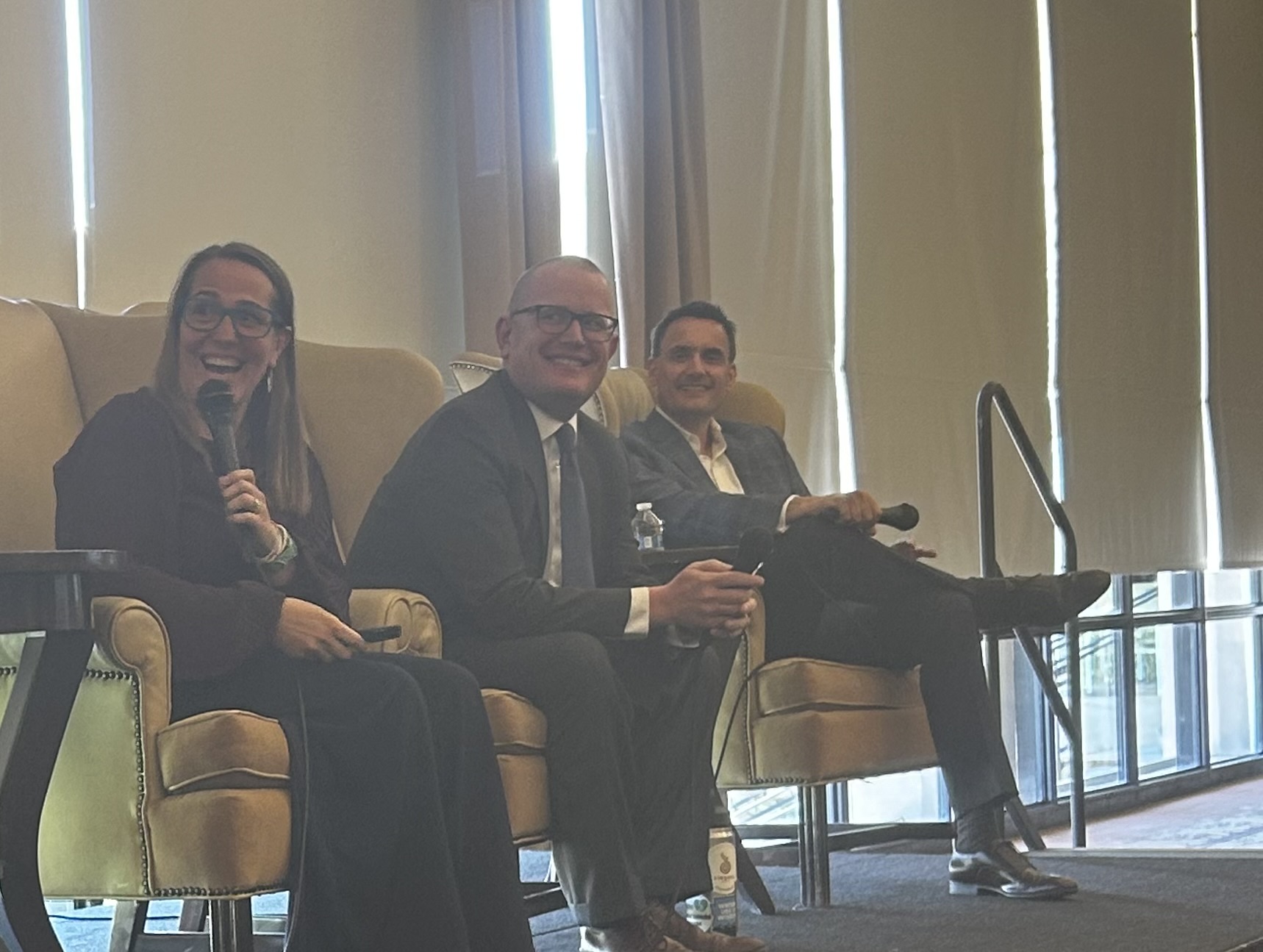
The third topic was a panel of three water providers. On the public side, Scottsdale Water’s Gretchen Baumgardner and the City of Phoenix’s Max Wilson participated. Thomas Loquavam represented private provider EPCOR in the discussion.
Baumgardner stated Scottsdale receives most of its water from the Colorado River. The vast majority of Scottsdale water goes toward single-family residences. Commercial uses take the next highest volume, followed by multifamily.
Wilson said Phoenix gets the majority of its water from the Salt and Verde rivers, which is closely followed by its use of Colorado River water. Notably, Wilson pointed out that more water is used for the exteriors of homes than for all businesses in the city combined.
Loquavam followed up by asserting EPCOR received most of its water from groundwater allocations. In a stark contrast to Phoenix, the private water provider does not receive any water from the Salt River Project. EPCOR does, however, have a CAP designation.
When asked about what is on the horizon for the different providers, Loquavam began by pointing out EPCOR’s flexibility. The company can see growth anywhere but is focusing its efforts on the West Valley and San Tan Valley areas.
EPCOR is also spending a large amount of time looking into untapped resources. The company is currently able to reuse 96% of its water.
Both Scottsdale and Phoenix are interested in bolstering advanced water purification centers. Advanced water purification is when water is treated multiple times. This can result in water that is so “clean” that providers must inject various minerals for its consumption.
Advanced water purification will not create more water, but it will allow cities to get the most use out of every drop possible.
When asked about funding, Wilson said the public entities do not operate at a profit. Money obtained from water bills and other means is redirected toward operational costs and investing in new infrastructure. Funds are also obtained from state and federal grants.
Wilson went on to highlight one of the largest issues in Arizona: growth. Arizona finds itself in a unique situation where it is feeling pressure from both aging infrastructure and booming population growth. This creates cost pressure as old pipes need investment, while new pipes are to be installed.
The panelists were then asked about potential impacts from future Colorado River allocation reductions. Loquavam believes the cost of water and supplies are going to continue to rise. This could result in residents making difficult decisions surrounding gardens and pools.
Wilson began by taking a step back and pointing to data that demonstrates this is the least amount of water the Colorado River has had in at least 1,200 years. He went on to say, “This is far outside the design parameters of any of the infrastructure that was installed for us to be able to live in the Valley… This is just not the world we designed the city around.”
Baumgardner said Scottsdale is looking into the creation of more wells to combat the reduction in allocated water from the Colorado River.
All three panelists agreed communication between water providers and users is immensely important as water sources change.
Panelists were asked about what keeps them up at night. Wilson pointed toward climate models that found precipitation has remained the same; reductions in the amount of water in the Colorado River are due to increasing temperatures. This problem, as time goes on, will only continue to worsen. Despite this, Wilson believes the right people are in place to find solutions to these issues.
Loquavam fears that the next large-scale project, whatever it may be, has yet to commence. He pointedly stated, “Really, we should have started it 10 years ago. The next best day is today, and we won’t start it today.” He further went on to say that the lack of action will likely result in a bout of pain, but he has hope for future developments that will address these issues.
The final question to the panel surrounded what the water providers needed from developers. Wilson reiterated a previous point Baumgardner had made surrounding developers fully “buying in” to projects. Existing pipes and infrastructure are in place due to developers of the past, and future pipes are reliant on developers of the present.
Water Infrastructure Financing Authority
The final speaker of the Water Summit was Chelsea McGuire of the Water Infrastructure Finance Authority. McGuire began by describing WIFA as a bank. The authority takes public money and invests it in water infrastructure.
WIFA was recently granted three allocations from the State of Arizona to ensure the sustainability of the current and future water supply, while developing a “holistic approach” to water security. This created three funds: the $214M Water Conservation Grant Fund, the Water Supply Development Revolving Fund and the $450M Long-Term Augmentation Fund.
The Water Conservation Fund is intended to preserve the existing water supply. The Revolving Fund is directed toward water infrastructure in rural areas, and the Augmentation Fund focuses on finding undiscovered water sources. Roughly 75% of the fund is directed toward finding sources outside of the state.
The WIFA board decided it wanted to find these solutions in a competitive way, meaning it wanted to tap into the private sector for assistance. McGuire also stated the authority intends to be as transparent as possible throughout the process. The entire process is to be reliant on verifiable data from qualified people and teams.
The most recent development from WIFA was the creation of its Project Development Process. WIFA recently brought on HDR Engineering to serve as a consultant. WIFA has found the state needs between 100,000-500,000 acre-feet of additional new water on an annual basis.
The Project Development Process begins by using the procurement process to bring in teams to ask specific questions, meet certain criteria and then submit a water importation project idea.
Once teams are selected, they essentially become consultants to advocate for their own projects. Proceeding this, WIFA will enter pre-project development with one or more of the teams.
Currently, WIFA is conducting one-on-one interviews with various teams. Offers are due in the middle of August. The board is set to make an official determination in October.