
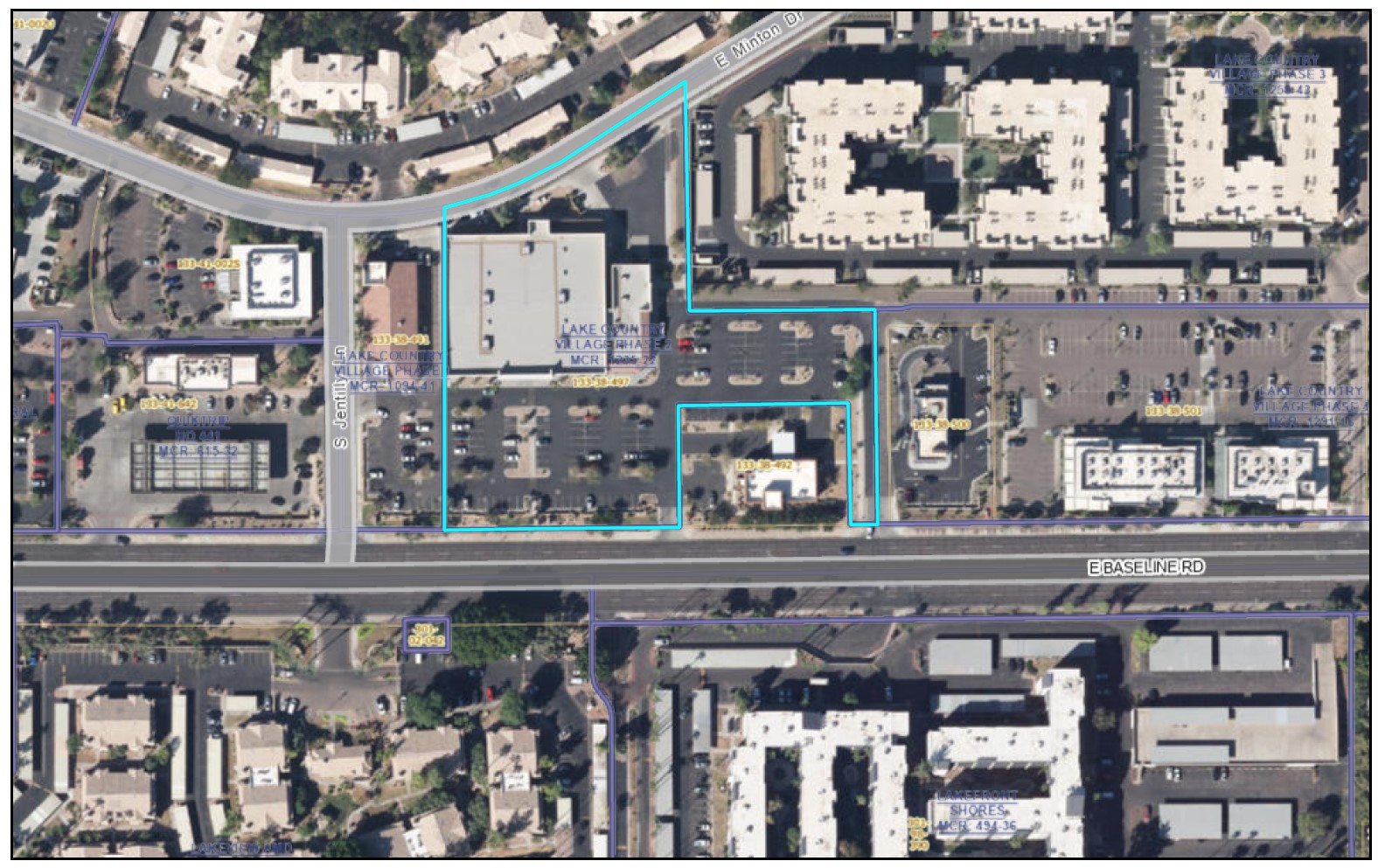
In January, the City of Tempe announced it was planning to recreate a three-acre former Big Lots retail site at 950 E. Baseline Road into a combined site with a new fire station and at least 50 affordable housing units.
The announcement listed four primary considerations for the project:
- A minimum of 50 affordable housing units near essential services and employment opportunities;
- A new fire station;
- Design that accommodates co-location of the two uses, such as noise reduction measures, and
- Maximizing land use and effectively meeting broad community needs.
The $6.6M site purchase was touted as the first investment under the City’s 2024 Affordable Housing Bond and the first co-location of a fire station and housing development in the Valley.
A recent local news report detailed how the City is working to iron out how the property will be shared and how the housing will be funded.
Officials praised the site as an outstanding fire station location, as it will help improve response times in the area, with one official saying finding and procuring the site was “miraculous.”
As far back as 2019, Tempe began looking at shortcomings with the existing Fire Station Number 3 at 5400 S. McClintock Dr. The current station was built in 1974 and has, over time, aged to the point it now has significant structural and functional problems, including how Tempe Fire Medical Rescue deploys its ambulances and apparatus. A review found, “Major renovations sufficient to make room for an ambulance crew and optimal fire apparatus deployment would not be possible on the current site without significant cost.”
Tempe’s overview page for the Big Lots redevelopment says, “A fire station location study completed in 2021 recommended placing a fire station near Rural and Baseline roads, with a second station planned farther east at a future location.
“This approach allows Tempe Fire Medical Rescue to better position firefighters and paramedics as the city continues to grow and change, helping crews reach emergencies more quickly.”
Among the details officials are examining are the need for separate entrances for the two use types, how utilities would be implemented and coordinated, and how traffic and noise would be managed.
Officials expect to eventually select a third-party developer to build and operate the housing component. That developer will likely pursue funding under the federal Low-Income Housing Tax Credit program.
While time spent in the planning, approval and permitting processes can add to development costs, particularly in the current period of rising construction costs, the City’s direct involvement could be a mitigating factor in minimizing delays.
A feasibility study will help guide the design, financing and shared operations components, the article said.
Tempe is examining how other cities have joined housing developments and fire stations to learn from others’ experiences.
According to the original January announcement, “Two current tenants have leases through 2028 and no changes are imminent. During this time, Tempe’s Community Health and Human Services Department and Tempe Fire Medical Rescue will begin to reimagine the site and eventually seek a development partner.”