

The federal government recently released its new plan regarding Colorado River allocations.
The plan will require cuts from the three Lower Basin states—Arizona, Nevada and California—but not the four Upper Basin states—Colorado, New Mexico, Utah and Wyoming. The Lower Basin states may undergo annual cuts of up to three million acre-feet of water.
The new plan has different avenues depending on the amount of rainfall and snowfall seen over the course of the upcoming years. The most extreme cuts could reduce Arizona’s Colorado River allocations by 77%.
The Lower Basin states collectively submitted a proposal to the U.S. Bureau of Reclamation requesting lower cuts for the upcoming year, to which the federal government did not agree. The federal government also rejected the Lower Basin’s request for a 2% cut to the Upper Basin. Aspects of the request, however, have made it into the overarching plan.
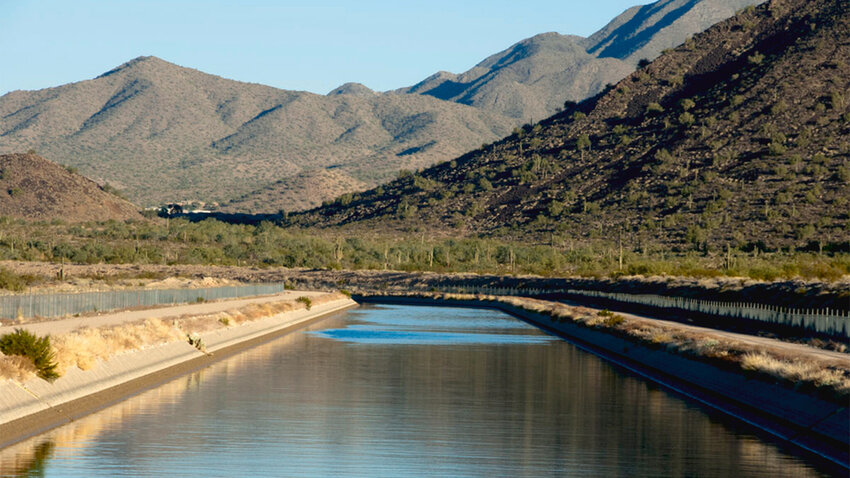
Of the three states in its cohort, Arizona is the first to receive cuts, due to a 1970 agreement that helped create the Central Arizona Project canal.
Lake Mead and Lake Powell, two major bodies of water in providing the crucial resource to millions of people, are at historic lows due to decades of drought. The lakes are so low they may fall below the level required to generate hydroelectric power.
To further exacerbate the problem, this most recent winter had one of the lowest snowpacks in the past 20 years.
Fortunately for the Grand Canyon State, it is not solely reliant on the Colorado River. The Salt River Project helps provide water from the Salt and Verde rivers. Groundwater also serves as a major resource in Arizona.
For example, the City of Phoenix receives 58% of its water from SRP, 40% from CAP and 2% from groundwater. Wastewater is also often reclaimed for uses like irrigation and power generation.
Local Response
Arizona leadership vocally disagreed with the recent action, arguing the Lower Basin is being treated unfairly. Phoenix Mayor Kate Gallego said the crisis would be better handled by a basin-wide solution, as opposed to sacrificing the Lower Basin.
The Arizona Department of Water Resources said the extreme end of the plan is “unacceptable.” Gov. Katie Hobbs stated Arizona is prepared to cut nearly a third of its allocation. She also said her administration will continue working toward a more equitable solution before things change.
Arizona officials have generally noted the importance the state has in the national agricultural, weapons and semiconductor industries.
Officials have also stressed that the State has long worked toward finding ways to cushion water cuts. (Source: Independent Newsmedia)